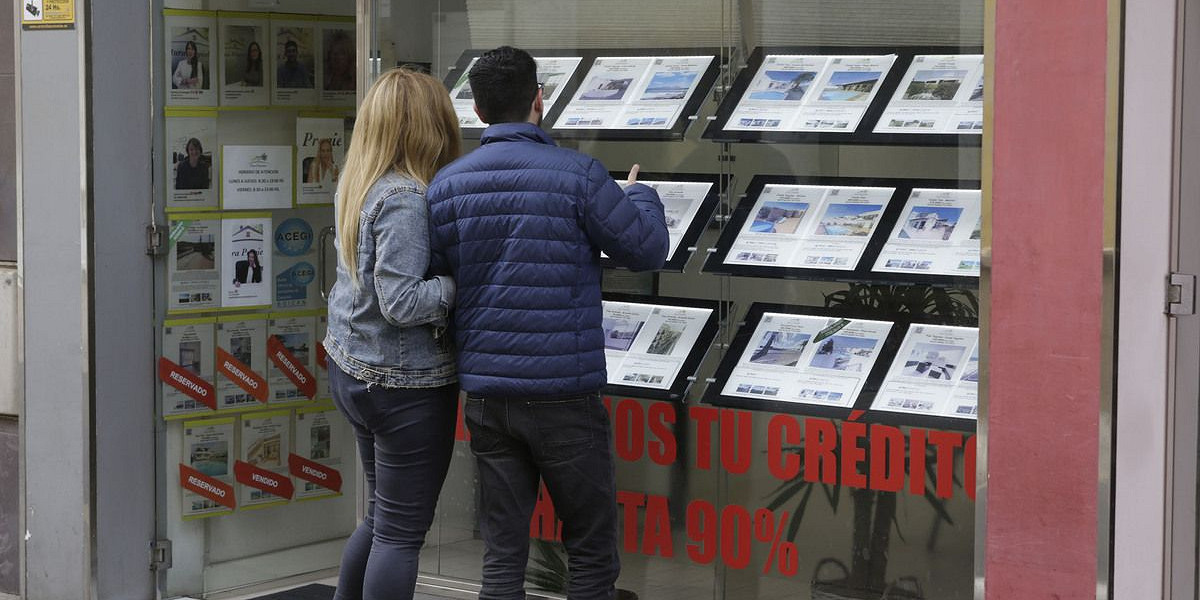
Only 1% of rental apartments in Spain are truly affordable for young people. In Germany, that figure rises to 30%. The difference is stark. In Spain, almost half of young people between 25 and 34 years old still live with their parents. In France, only 20% of young people manage to move out on their own, despite the high prices. Ultimately, housing is more accessible precisely in the countries where fewer people buy homes.
Things have become difficult for everyone, but some are struggling more than others. Young people, for example, are particularly vulnerable to rising prices. The European Foundation for the Improvement of Living and Working Conditions (Eurofound) makes this clear: young people have lower salaries, experience greater job insecurity, and are forced to move for studies or work. The problem is widespread in Europe, although the situation varies from country to country.
In Spain, barely 1.2% of rental apartments in cities are affordable for young people. In France, it's almost 20%. In Germany, it's almost 30%. Spain fares much worse than the rest of the major European economies. And that's not even mentioning other countries: in most, the percentage of affordable rentals for people under 39 doesn't exceed 15%. In Croatia, Cyprus, Greece, Hungary, Latvia, Portugal, and Slovakia, finding an apartment that won't break the bank is practically impossible: less than 0.5% meet the criteria. Only seven of the 24 European countries analyzed have more than 10% affordable apartments in cities, with Germany and France leading the list. Sweden and Finland lag behind at 14% and 11%, respectively.
The report points out something that seems obvious when you see it: in countries where renting is the most common option, there are more affordable apartments. Where buying predominates, young people have a much harder time. In Spain, 65% of people own their own homes. Only 35% rent. Italy and Portugal are the same. In Central and Northern Europe, renting is more prevalent. Germany has the highest percentage of renters: almost 70%.
Eurofound warns that the figures may vary because in some countries much housing is not advertised online, so the study may not capture the entire market. But the lack of affordable housing is real. The report states it bluntly: the shortage of social housing and subsidized apartments has worsened the situation, and many people have to turn to the private market, where prices have skyrocketed because there is far more demand than supply, especially in large cities and tourist areas.
The result for young people? In many areas of Spain, Portugal, Poland, Ireland, and Bulgaria, more than 80% of their salary must be spent on rent alone. In coastal areas of Spain, even their entire salary isn't enough. And although the problem is more acute in cities, things aren't easy in the countryside either: in some rural areas of Spain or France, there are hardly any apartments, and the only real option is to stay with their parents or buy one.
Thus, becoming independent becomes a distant dream for many. In the European Union, almost a third of young people between 25 and 34 years old still live at home with their parents. In Spain, 46% of young people in that age group have not been able to leave. Italy and Portugal are in the same or worse situation. In contrast, in France and Germany, only 16% and 12% of young people, respectively, still live at home; in Denmark and Finland, barely 3%. Croatia is a different story: there, 64% of young people still live with their parents.
The study also attempts to determine if this is a matter of preference. In Spain, there are 3.5 million households made up of people between 18 and 39 years old, with an average of 3.4 people per household. In many cases, the reality is that staying at home is not a choice, but the only option.
Even so, the survey shows that people prefer households of around 2.4 people on average, and that excludes the formation of some 1.5 million new households. Why are they unable to meet their expectations? Basically, because they don't earn enough and can't find available housing where they want to live. The report makes this clear: "Addressing the youth housing shortage must be a political priority." Among its proposals, it suggests creating revolving funds to reinvest public revenue from rents and mortgage interest in affordable housing. Furthermore, it advocates for supporting construction and the revitalization of vacant properties rather than providing direct subsidies to tenants.